Saturday, 27 February 2010

The Secret Life of the Berlin Wall: BBC


“It was understood that the wall was better than a war.”

The Secret Life of the Berlin Wall shows the divided city and its two sides, heroes and villains, and “a world of good intentions heading in bad directions. A world where nothing is what it seems to be”. It claims;
“the wall was the victor. It got bigger, more sophisticated, more efficient. The wall was here to stay, and so were the people behind the wall.”
The program shows people who lived under two opposing systems, and their opinions: “Sure there were 30 types of cheese in the West and only three here. And only one tasted good. So what – what is more important?”


Sim, K. (2010) The Secret Life of the Berlin Wall. [online] http://www.bbc.co.uk/programmes/b00nx0y6 [26/02/2010]
On Youtube, in 9 sections:

Friday, 26 February 2010

Austin Kleon and Newspaper Blackout

20 Minutes in the Closet

Agoraphobia

Kleon, A. (2010) 20 Minutes in the Closet. [online] 
[26/02/2010]
Kleon, A. [2010] Agoraphobia. [online]
[26/02/2010]

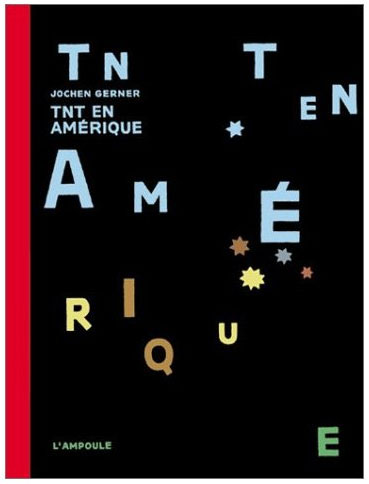
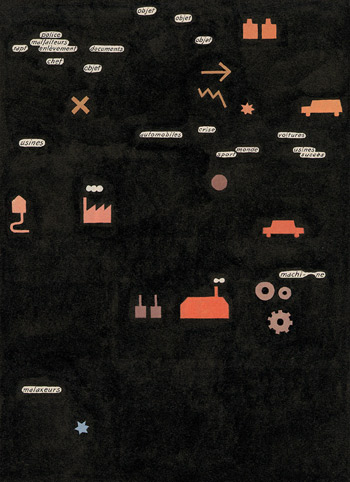
TNT en Amerique by Jochen Gerner


This work by Jochen Gerner is based on Tintin in America, speech bubbles to phrases and images into graphic symbols (Kleon, 2007).
Kleon, A. (2007) TNT en Amerique by Jochen Gerner. [online] 

The Only True Guide to Russia by Ilia Kitup


Kitup, I. [2010] The Only True Guide to Russia: Hidden Secrets Revealed. [online] 
http://wordswithoutborders.org/graphic-lit/the-only-true-guide-to-russia-hidden-secrets-revealed/ [26/02/2010]

Against Comics by Jochen Gerner and Edward Gauvin

This is a work by Jochen Gerner, translated by Edward Gauvin.

More graphic literature at: Words without Borders.

Gerner, J. & Gauvin, E. (2008 & 2009) Against Comics. [online] http://wordswithoutborders.org/graphic-lit/against-comics/ [26/02/2010]

Three Times Germany by Uwe Mengel

Three Times Germany is a series of monologues based on interviews of "East Germans, West Germans, and Germans living in New York" [Wrods without Borders, 2010]. Following his journeys from East to West Germany in 1974 and to New York in 1980,  Uwe Mengel interviewed Germans who he encountered on his path. 23 monolugues are performed by 8 actors.

More German literature, poems, fiction and non-fiction can be found at Words without Borders.


Words without Borders [2010] Three Times Germany. [online]
http://wordswithoutborders.org/article/three-times-germany/
[26/-2/2010]
Three Times Germany in Audio (57:06):
http://wordswithoutborders.org/media/2_01_track1.mp3

Words without Borders [2010] November 2009: Twenty Years After: Germany Then and Now. [online]
http://wordswithoutborders.org/issue/november-2009/ [26/-2/2010]

Wednesday, 24 February 2010

Short Films at VIS


The event looks cool, but I've missed it by about 9 months.

VIS [2010] Berlin ’89 – Of Walls and Men. [online]
http://viennashorts.com/en/festival/programm-2009/gastprogramme-2009/berlin-89.html
[24/02/2010]

Ze Frank, Stumpy and Collaboration

I have emailed Ze Frank about the collaborative process of Stumpy. He said the project started at:
http://www.zefrank.com/theshow/archives/2007/02/021907.html


This is the link to "the show". Frank had asked his viewers to contribute illustrations in a social network ORG that he managed. The show apparently was "one of the earliest video blogs to incorporate viewer action to create context", and was a "conversation between the host and the viewers of the program" [zefrank.com, 2010]. The show ran from March 2006 for a year.

Zefrank.com [2010] About the Show. [online]
http://www.zefrank.com/theshow/archives/2007/02/021907.html
[24/02/2010]

Pixar Collaboration


Are there opportunities for the artists in collaborative projects to voice their opinion? Communication seems to be at the foundation of collaboration, and all artists should feel able to talk freely. Yet, this is one of the obstacles I'm struggling to pass.
"Dailies at Pixar are very collaborative, and animators are encouraged to voice their opinions and solutions alongside the director and supervisors. Still, being the rookie, I didn't want to presume or suggest that I was smarter than anyone else in the room, much less make a fool of myself by suggesting something that might be obviously wrong to all the others." [Navone, 2010]
This picture book project came up through my BA dissertation, based on the Berlin Wall and perceptions. The story, about two bears living in Berlin exploring the new city and their differences in values, was developed in my discussions with Albert Lamb, an author and a play write, Andrew Sturman. So it can be hard for the collaborating artists to discuss or to change the story, if they feel that it's my story...

Another issue I feel we need to solve is communication of the group. I might be at the hub of this group, due to the way this group formed, and that other artists don't feel comfortable communicating to each other. It's either that, or I'm unaware of what the group is discussing/developing the project. 

Navone, V. [2010] Inside Dailies at Pixar: Expressing Your Opinion About Changes in Animation. [online]
http://www.animationmentor.com/newsletter/0909/feature_geek.html#tipTrick
[24/02/2010]
The Pixar Touch (2009) Collaboration in Production. [online]
http://thepixartouch.typepad.com/main/2009/09/collaboration-at-pixar.html
[24/02/2010]

Sunday, 21 February 2010

Korean Comics Collaboration

Lamers, M. (2009) Interpretations of Korea. [online] http://www.koreaherald.co.kr/NEWKHSITE/data/html_dir/2009/11/18/200911180053.asp [21/02/2010]
Gaymer, D. (2009) "Tiger and Bear" Explore Modern-Day korea. [online] 
Topple, J. (2009) Tiger and Bear: Korea Comics Collaboration. [online]  http://www.comicslifestyle.com/forum/topics/tiger-and-bear-korea-comics [21/02/2010]

Go Home: Stories of Immigration

Go Home: 12 Moving Stories was produced by artists from cross-cultural background to illustrate the issue of immigration, with "the aim of using comics to promote greater cross-cultural understanding" [Asia-Europe Foundation, 2010]. 
Asia-Europe Foundation [2010] Asia-Europe Comic Project. [online] http://comix.asef.org/progress.html [21/02/2010]

Ze Frank, Viewers and Stumpy

Ze Frank has produced short story where he tells a story of a duck named Stumpy and had his viewers illustrate it (Frank, 2008). The result is many different styles of images illustrate the story. I have emailed Ze Frank to ask about his collaboration with his audience.


Frank has also hosts Frailty which he describes "a collaborative illustrated poem" [Frank, 2010]. Here, he has posted lines for the viewers to illustrate using Scribbler and to email him, to be posted as an online picture book in the future. Scribbler adds an effect to the images drawn, and unlike the images of Stumpy, give similar touches or strokes. This is my sketch of the Wall.

Frank, Z. (2008) Stumpy Movie. [online] http://www.zefrank.com/zesblog/archives/2008/09/stumpy_movie.html [20/01/2010]
Frank, Z. [2010] Frailty: A Collaborative Illustrated Poem. [online] http://www.zefrank.com/scribbler/frailty/ [21/02/2010]

Friday, 19 February 2010

Drew Weing's Pup Ponders

"'Pup' Ponders the Heat Death of the Universe" by Drew Weing allows the reader to scroll and read through the comic vertically and horizontally. 


Weing, D. [2010] "Pup" Ponders the Heat Death of the Universe". [online] http://www.drewweing.com/pup/13pup.html [19/02/2010]
Weing, D. [2010] http://www.drewweing.com/ [19/02/2010]

Scott McCloud, Digital Comics

Between 2001 and 2004 Scott McCloud created comics based on suggestions from his readers [McCloud, 2010]. McCloud (2005) also talks about how websites have changed comics and how it has expanded limitations set in print media, relating to screens as a window, not a page, and allowing "durable mutations".


McCloud, S. [2010] The Morning Improv. [online] http://scottmccloud.com/1-webcomics/mi/index.html [19/02/2010]
McCloud, S. (2005) Scott McCloud on Comics. [online] http://www.ted.com/talks/scott_mccloud_on_comics.html [19/02/2010]

Daniel Merlin Goodbrey and PoCom-UK-001


Daniel Merlin Goodbrey created a "collaborative hypercomic" for an ICA  wall using the Tarquin Engine, a Flash-based zooming system [Goodbrey, 2010]. The comic expands into a diagram like chart, mapping each frame in sequences and various paths where the audience can choose the order to view the comic.

The diagram looks similar to the index of HBO Imagine, which also uses an interactive interface for its narration.


Goodbrey, D.M. [2010] PoCom-UK-001 - 22/8/2003. [online] http://e-merl.com/hypercomics [19/02/2010]
HBO [2010] HBO Imagine. [online] http://www.hboimagine.com/ [19/02/2010]

Tuesday, 9 February 2010

Communication Issues 2

Even when you are in contact through Skype or emails, it is difficult to pass words on. Face-to-face does help, but it doesn't solve all problems either...
Adams, S. (2009) Strips: December 16, 2009. [online] http://www.dilbert.com/strips/comic/2009-12-16/ [11/02/2010]

Communication Issues


Communication, communication, communication. I feel this is the key issue to collaboration, and it's not so easy. It's not emails, Skype, texts, or any other software alone, but skills of communication as well as positive and ongoing motivation.
Adams, S. (2009) Strips: December 18, 2009. [online]
http://www.dilbert.com/strips/comic/2009-12-18/ [11/02/2010]

Friday, 29 January 2010

Skype Conf 29/01/10

I wasn't sure how it was going to turn out, as I've not been too successful in organising an online meeting for this project, but it was very constructive. Perhaps it's not as if everyone has to be online at the same time, as long as people communicate their ideas (there were 3 out of 5 project members at this online conference).

We covered the following.

  • Editing/sharing: how we'd collaborate with Dropbox and Google Docs (share images and music on Dropbox, and edit text on Google Docs), so we won't be editing a different storyline in different places. Some feedback on the storyline too (suggestion to add events);
  • Music: bouncing ideas for the music score, to combine old and new instruments and styles; and confirmed we'd keep the minimalist structure, which adds a layer every time the reader turns the page, and;
  • Research: look into adding layers of music/sound with Flash and actionscript, online and through college.
We didn't set the time for the next meeting, as I didn't know the schedules of the two members who couldn't participate. I'll cover that by contacting them individually, and set the time. It was a productive introduction for a digital collaboration for me.

Sunday, 24 January 2010

Jonathan Harris on Collecting Stories

Jonathan Harris tells his story of collecting stories. Here he talks about We Feel Fine, which allows people to search and visualising stories, and also of Whale Hunt, an interface where photographs are designed to construct a story and into substories (Harris, 2008a).


It doesn't let me look for postings made on 9 November 2009 in Berlin though.

Harris, J. (2007a) Jonathan Harris Collects Stories. [online] http://www.ted.com/talks/jonathan_harris_collects_stories.html [24/01/2010]
Harris, J. (2007b) Whale Hunt. [online] http://thewhalehunt.org/ [24/01/2010]
Kamvar, S. & Harris, J. (2007) We Feel Fine. [online] http://www.wefeelfine.org/  [24/01/2010]


http://www.number27.org/wefeelfine.html

Sunday, 27 December 2009

Talks with Albert Lamb, 24-26 Dec 2009

Cotton (2000) claims that there is "some commonality of experience of childhood across contemporary European cultures" that are accepted among children with similar cultural backgrounds, "animals are often used as a metaphor for childhood, with allegorical descriptions treating animals as participants in human-like worlds” to reach across children/audiences from diverse cultural backgrounds (Cotton, 2000, p.33).

In my discussions with Albert Lamb, an author and cartoonist, we thought of a bear who has overslept and woke up to a completely changed world - an idea similar to that of a mother in the film Good Bye Lenin! by Wolfgang Becker (2003). There would be a bear from East side of the Wall who woke up 20 years later (he also suggested A German TV series Heimat (Homeland) to get an idea of how people experienced the changes of Germany).

There's a male bear, who wakes up and meets a female bear from the West. The female bear is up to date and westernised, whereas the male bear is a socialist, just woken up and doesn't know the changes Germany went through.

Becker, W. (2003) Good Bye Lenin! [DVD] Berlin: X Filme Creative Pool GmbH.
Cotton, P. (2000) Picture Books Sans Frontières. Stoke on Trent: Trentham Books Ltd.