Saturday, 13 August 2011

50 years of division

Berlin Wall, 13 August 1961 -

I was interviewing a Berliner in Alexanderplatz. He was born in Berlin and grew up with the Wall, seeing the border from the Eastern side. He now lives in the reunified city, having longed for his homeland, East Germany, since it dissolved itself twenty-one years ago. I felt traces the Cold War division had left behind.


This project is based on socio-cultural observations in post-Wall Berlin. The city has lost most of the concrete divide, with some exceptions that exist as iconic backdrops for tourists, or in smaller pieces in souvenir shops. Euphoria has also faded, alongside empty political promises for blossoming landscapes, accumulating nostalgia and resentment. The divide is now in the mind.

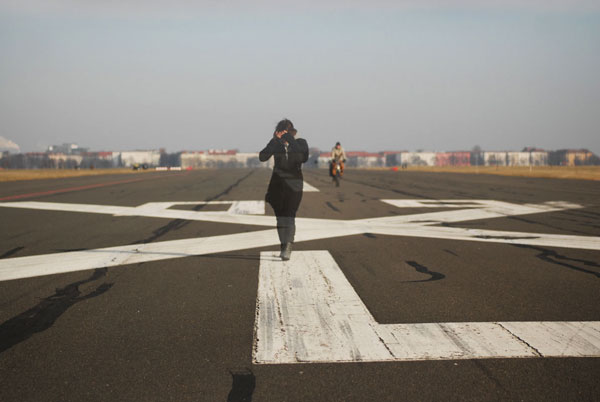
I have been photographing the former border and architecture that has lost its political might, and documenting Berliners’ experiences. The fading and re-emerging scenes reflect collective memories that linger like mist in the psychological landscape.
From my NUCA MA Show Artist Statement

Friday, 12 August 2011

steel screen stands


I've decided not to use the glass case for my display.

Since then, I've discussed with Kaavous the issue of holding the screens up on top of my MDF box/assembly, and decided to make steel stands, which gave me more choice of where to place the screens, over the existing stand. I have been working with Rachel in the metal workshop using plasma cutter and TIG welder to make these stands, which have holes on the base to let through cables for signal and power, and holes also for access to the control on back of the screen.

There is a slight wobble when the screens are fitted on, so I'll test and see how they work in the room, and see if I need to add extra support on the side.

Thursday, 11 August 2011

adjusting Screens 1+2

I have now added 3 seconds to Screen 1 and 2 clips based on a discussion with Terry and Nick last Saturday. I've emailed Nick about my plans for further changes, although this will be last-minute, to hear his views on it.


Wednesday, 10 August 2011

final week developments

I am thinking of altering the soundscape due to unexpected circumstances. I plan to finish the sound (mostly of interviews) and reduce/cut sound from Screen 1 to avoid two screens separating away. I'm leaving myself Wednesday and Thursday for the last minute editing, once Nick is available.

The glass fish tank idea is also out, as the turned-over fish tank looked just like a turned-over fish tank, and not a vitrine. There is another problem pointed out by an artist, that having two screens inside the tank could heat up, even with a vent hole on top of the column. The replacement box would be made of perspex and I don't have the time to test that.

On the positive side, the column box is built, and I will be making metal attachments for the screens to be fixed on top of the column. I'll paint the box, probably with eggshell emulsion, once I cut out holes for vent (side, bottom), headphones (front, near the top) and cables (back).

Then hooks for the headphones. And transcript.

vitrine, column, assembly...

I took a walk around the Castle Museum to get measurements for display cases and columns, as I struggled to imagine the size without any physical sense of it. Anna Green at the museum gave me a brief tour and also suggested that there might be an option of renting one (although I would have to drill holes for cables and vent... so this is unlikely to happen).

So, the height is to be around 1120-1150mm, length and width is to fit the glass fish tank in the NUCA basement.

Monday, 8 August 2011

Screen 1 [08/08/2011]

Thursday, 4 August 2011

Sound draft for Screens 1 and 2


Nick and Terry have designed draft soundscapes for Screen 1 and 2. I feel that their work has a lot of power, and have had to discuss how sound had to be slow and calm. I have seen their work previously, but realised my work needed a lot more subtlety than I originally imagined. I have earlier realised I needed to compromise on my editing work, as I realised I was holding back Nick and Terry from working on it. 

Through a meeting earlier with Shaun and Tom, I've once again realised it is important to have the plinth/column build soon. I need something to look at and work on, rather than thinking over it in my head. I've talked to Kaavous about this and will work in the Wood workshop next week.

Another issue I need to resolve is whether to provide the audience with transcript of the German interviews that will be played in Screen 2. I have decided not to use subtitles, partly because it would clash and distract attention away from images. Do I complete the narrative for the audience by supplying word by word information, or do I let the audience do that with their imagination?

As of now, I feel I should go for something in between, by supplying the info (also who these Berliners are) but having the booklet of transcript tucked away, so only those who wanted the additional data would access it.

Sunday, 31 July 2011

Screens 1+2


I've finished the Screen 2 draft, and have juxtaposed it with Screen 1. Although I have worked with Screen 1 in sight, there are some effects I am seeing as I see the screens positioned alongside each other. I have asked my sound collaborators for their opinions, and will be making further alterations.

Wednesday, 27 July 2011

Photoshoot, translation and editing clips


I have been photographing at an abandoned residential building of a former USAF base in Western Germany. They are based on ideas I have been developping, and will be going back to capture more images on Friday.

I will be working on my translations and Screen 2 tomorrow.

Tuesday, 26 July 2011

ratio and size


I have now changed the size and ratio of the clips for the screens I intend to use. I've spoken to Fran about how I could change the settings on Premier. Although this process meant remaking parts of the clips again, it was nothing like starting from scratch, which I feared it could have been. I've now put the file in Dropbox for Nick and Terry to have a copy of.

I've been talking to Phil, trying to find a solution to how I can best control 2 screens. This will be done with Mac Pro, MOTU Ultralite and Multiscreener (a MAX MSP program).

Next week, I will convert the clip and then add the sound file. I will also purchase/make 2-4 "stereo socket 1/4''  jack 2 mono 1/4'' jack plugs" for distributing stereo sound from each screens through MOTU Ultralite to headphones.

Saturday, 23 July 2011

meeting with Terry

I've had a meeting with Terry about screen 2 and sound.

Nick has previously pointed out how a music track I'd chosen would not work for the final project. I have asked for Terry for his opinion who then discussed the issue with Nick. It seemed that there was a misunderstanding to how we were going to use the track, and Nick will use the melody/tune and experiment referencing it in the project.

Sound for screen 2 (which Terry is working on) has issues which need to be resolved. I intend to play sections of interviews with Berliners I recorded in the city. Some are in German, but I find subtitles distracting to have with the images of the clips. One idea is not to use subtitles at all, although non-German speaking audience may find the context of the work harder to understand.

Friday, 22 July 2011

Mac pro, PD and the sound meeting

I have arranged to use 2 LC15 screens, and will switch from 2 Mac Minis to a Mac Pro. The decision to switch is based on the idea of controlling 2 screens with PureData, rather than to have them run independently and risk time lags which might develop over the duration of the show. I will meet Phil about PD, once the Mac Pro arrives in his office.  

I am also using an electricity cable from the wall to the column covered with a bridge to minimize risk of tripping. And 2-4 chairs.

The meeting with Nick was productive. He will take some music off and keep the sound to minimum, to pick up the subtlety of the images I have been working on, with a reference to Tacita Dean's work in Berlin.
"In constructing her narrative, Dean linked it with the passing of time, an obsession of hers; this is a meditation on the idea of transition. People arrive and leave, the waiters come and go, the sun rises and sets, the restaurant slowly changes. The visitor becomes both a spectator of and a witness to these movements, conversations and gestures." [Musée d’art de Joliette, 2011]
There an issue which I will consider based on his opinion, that  he thought the style of the track I recorded previously was not suitable to be used.

PDR - Nachbild vom Verschwinden des Palast der Republik
by Nina Fischer, Maroan el Sani
DV, video projection, colour, 1 min. loop, 2004

I am reminded, through discussions with Tom and Shaun, that my work is subtle and needs a simple display. I am struggling to decide how far I should elaborate on the column/vitrine, so that my does not sink in to the background of the room, and at the same time not overpower my clips. I hope to resolve this issue by trying out the designs in the exhibition space once I finish the clip for second screen.

Musée d’art de Joliette [2011] Tacita Dean - Fernsehturm. [Online]
 http://www.museejoliette.org/expo_temporaire/fernsehturm_en.html [21/07/2011]
Fischer, N. & El Sani, M. (2004) Nachbild vom PDR. [Online]
 http://www.fischerelsani.net/pdr/pdr_n.html [22/07/2011]

column ideas 2


Once I finish the screen 2 clip, I will test this idea out in the exhibition room (below). I've been stuck in thinking about various designs and feel that I need to move forward from that. 


Wednesday, 20 July 2011

Screen 1 Rough 1 [with sound]


Nick has composed the soundscape for my work. I'll meet him on Thursday and discuss what should be done to it next. I've been listening to it and making notes.

column ideas

A model of a display based on suggestions by Kaavous.

front

back

back detail

I have also found a cube fish tank in the basement of college and have arranged to borrow it, as I need to test out a way it works for my project.

Friday, 15 July 2011

problem design

Through a discussion with Shaun I've come to realise that the current gate design would overwhelm my clips. Although it's concept works with freedom/restriction of travel relating to the breaching of the Wall, its design draws too much attention away from the screen, and ultimately the clips...

I have spoken to Kaavous at the Wood workshop about redesigning it, and will be working on a less intrusive design. I will also look in to using Mac Pro, alongside 2 Minis, regarding controlling the 2 screens. The design would also need to consider where Pro (or Minis) would go. Housing them in a bench box is an idea to keep the screen plinth slim.

Friday, 1 July 2011

Disappointing Reunification: How the East Was Lost

The West German currency Deutsche Mark of was introduced in East Germany 20 years ago today, although "the eastern German economy is still in a sorry state, and there are no indications that the situation will change" (Neubacher & Sauga, 2010).


"I would have sharply increased taxes and would not have pursued reunification with borrowed funds. There is quite a bit of self-deception in the notion that now, in the year of the 20th anniversary of reunification, we are congratulating ourselves on how wonderfully everything has turned out. The facts say otherwise: the high unemployment, the depopulated areas. And the phenomenon that people call "the Wall in our minds" still exists." (Grass, 2010)
Grass, G. (2010) SPIEGEL Interview with Günter Grass: 'The Nobel Prize Doesn't Inhibit Me in My Writing'. [Online] http://www.spiegel.de/international/zeitgeist/0,1518,712715-3,00.html [01/07/2011]
Neubacher, A. & Sauga, M. (2010) Germany's Disappointing Reunification: How the East Was Lost. [Online] http://www.spiegel.de/international/germany/0,1518,703802,00.html [01/07/2011]

Thursday, 30 June 2011

clips 30 June, 2011


I have made a clip which would be played on 2 screens, based on a discussion I had with Terry and Nick, that sound of one screen can connect to the other or imply that it is somehow linked to the other. There will be some clips which will crossover 2 screens.

without perspex


This could be the answer to the column/plinth idea, without using perspex sheets. It combines ideas of travel and freedom of movement, one of the issues closely related to the opening of the Wall, as well as restrictions and authority. It would compromise the sense of time I would like to create by using an archived display with perspex, but would creates a frame and physical space with direction.

The top section (control unit) could host Mac minis, hang screens, and the electricity cable coming off from the base of the gate.


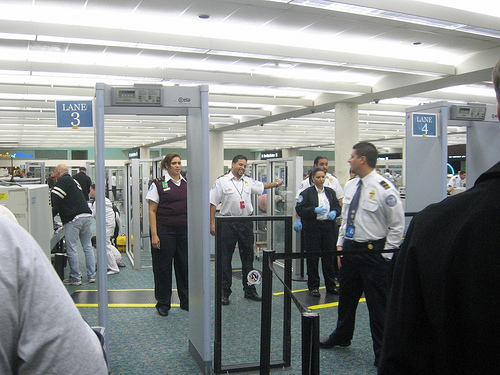
Dimensions of walk-through metal detector gates

The control unit should hold over 10kgs (Mac minis 1.37kg × 2, screens 3.5kg × 2, 2 perspex sheets, cables).


Sunday, 26 June 2011

more clips 26/06/11


Adverts on rotating column, just on the Eastern side of Oberbaum bridge, once a border crossing. East Berlin did not have adverts during the divide, but it was interesting to have 3 adverts with human torsos.


Another clip made of still images taken in Mauerpark. Flights take off from Tegel in West, and fly over to East. It reminded me of The Wall Jumper by Peter Schneider. Having 2 planes at different speeds to illustrate the still divided aspects of 2 Germanys.

more clips 02


Reflection of Federal Chancellery on Paul Löbe Haus.


A Soviet tank and a statue of a Red Army soldier, on Strasse des 17. Juni, a West Berlin street named after the East Berlin uprising in 1953. The street lead up to the Brandenburg Gate, and stopped. 


Sunset at Lufthansa Transfer Center in Düsseldorf airport. 


This is an older clip of the one below, which I've changed the timing of merging, and has a slightly faster transition. This park was the border strip between East and West Berlin before the Wall was breached. Flea market, beer, karaoke, and May Day demonstrations. 


A documentary of the park by Sally Mumby-Croft

Thursday, 23 June 2011

4 more clips, and a sound meeting


At the meeting Terry and Nick have suggested ideas on the relation of images and sound on two screens (I plan to have one screen for the clips I've been creating, and the other for interviews of Berliners). One idea is to have sound and the clips on both screens linked and have a single sound track to be played on 4 headphones: the other is to have quiet sound from the other screen playing in the background, but not sufficiently loud enough and thus encouraging the audience to pick up one of the other two headphones.

We have also worked out how Nick would work on composition/music and Terry on editing and mixing. Nick will start once I confirm which clips would be used, as well as the final sequences of the clips. Which could also lead to changes on transitions of the clips later on.

Wednesday, 22 June 2011

more clips


This clip shows a metal gate on the Wall, and Berliners cycling or walking by. The perspective changes from viewing West, and then East.


Observation of the river Spree.


Photographs of sunset on Spree are used against the grain of time, with the sun rising and appearing in two.


Scenes shot from a boat on the river Spree, as it cruised by sites in Berlin.


A park with a border guard tower.


Reflections of buildings in East Berlin, and the TV tower.


Friday, 17 June 2011

plastic, sound and other issues

I find out that 4 plastic sheets for my column/vitrine design would cost around £100, or £400 to have the edges polished for the corners and assembled. I will redesign the column with less plastic, or with alternative material.

I have talk to Carl for headphones and Mac minis, and it looked hopeful I'd be able to use 4 headphones and 2 minis.

I've also been creating clips.


There was a wedding party on a boat on the river Spree, and the group had just got off onto the riverbank. The Wall and the TV tower are in the background. The clip starts with a post-celebration image, and the balloons come back into people's hands. I'm planning on making a another clip with images taken at the same location, but subtly different, to portray uncertainty of memories.


These images were also shot on the riverbank which used to divide East and West. On the building that was once used by the East German border guards is an advert for Sky, which reads, I do not watch TV. I see something better ["Ich guck keine Fernsehen. Ich seh was Besseres." ]

Although this isn't visibly too clear.


Red phone and images of Lola Rennt. The film was shot in Berlin, where Lola fights with time and changes what was supposedly her destiny in the changing city, with multiple experiences of parallel timelimes. 

Thursday, 16 June 2011

blind critique


This is the draft clip I made for the blind crit session today, with sound I added [not by Terry and Nick]. I'll make further considerations, tests and adjustments regarding the following points.

General
Quiet observations of everyday things, poetic, dreamy, subtle
Some surprises, revealing the hidden
Need to specify what the message is. How ambiguous or descriptive should it be, for the audience in England to understand
Don't overload messages (subjective nature of memory, on top of nostalgia, divide and loss) 
Repetition of images were unnecessary, and some images dragged on
Length (7 minutes) seemed okay [this will be different once it's looped]


Sound
Sound at the end of the clip wasn't prominent enough [this would change when it's on loop]
Letting sound be sound works with images
Should relate directly to images, which will clarify the message

Some of these were surprising for me to hear, as my intentions were perceived in a different way (for example, repetition of images with different background sound was to enhance the sense of subjective memory). I thought it might seem too long and too subtle, but that didn't seemed to be a problem with the group I met today.

Sunday, 12 June 2011

Considerations on Planer LC15 ANN 1000


Issues I will consider in using Planer LC15 ANN 1000 for the MA Show are:

  • ratio/resolution of screen, from laptop or DVD player to the screen, 
  • how to hang it inside the vitrine, and
  • resolving the reflection of the screen.

I will also contact Sandlant again, to ask if the plastic sheets could be cut to size, and mitred on some of the edges.

I am working on the design of the column/vitrine:
  • on how to hang the screen, 
  • on connecting cables, and
  • where to place the speakers.


A column would allow me to hang the screen inside, which a NUCA vitrine (below) wouldn't.


Measurements of a NUCA vitrine

Friday, 27 May 2011

Joseph Beuys, vitrines, politics


Joseph Beuys lecturing at the 1980 Edinburgh Festival


"Filled with with urban detritus, the vitrine memorializes the remains of a 1972 action performed by Beuys in Berlin following the left-wing May Day demonstration; he and two students used a red broom to sweep up the rubbish in Karl-Marx-Platz." (Barron, 2009)

In 1960s Joseph Beuys satirised the Wall by suggesting that it should be raised by 5cm "for better proportion" [Tate Modern, 2011].

Barron, Stephanie. (2009) "Blurred Boundaries: The Art of Two Germanys between Myth and History" in Art of Two Germanys: Cold War Cultures, pp.12-33. 
Curiger, B. & Whiteread, R. (2010) The Process of Drawing is Like Writing a Diary" [Online]
Tate Modern [2011] Track 6: Lightning with Stag in its Glare, Beuys and the Berlin Wall. [Online] http://www.tate.org.uk/modern/exhibitions/beuys/mp3/06_berlin_wall.mp3


Beuys and the Berlin Wall


Joseph Beuys' "entire artistic career was spent in its shadow. He'd satirised the wall in the 1960s by suggesting that it should be raised by 5cm, 'for better proportion'... Lightning with Stag in its Glare, came directly out of an installation that Beuys made in Berlin, in 1982, in the Martin Gropius Bau - notable for its close proximity to the wall and therefore a symbol of divided Germany. Beuys spent a week grouping objects together in the gallery's courtyard, as part of a temporary exhibition called 'Zeitgeist', 'Spirit of the Times'".

Tate Modern [2011] Track 6: Lightning with Stag in its Glare, Beuys and the Berlin Wall. [Online]  http://www.tate.org.uk/modern/exhibitions/beuys/transcripts.shtm#track6 [26/05/2011]
Tate Modern [2011] Untitled (Vitrine)  1983. [Online] http://www.tate.org.uk/servlet/ViewWork?workid=963 [26/05/2011]

MoMA (2010) Joseph Beuys. (German, 1921-1986) [Online] http://www.moma.org/collection/browse_results.php?criteria=O%3AAD%3AE%3A540&page_number=14&template_id=1&sort_order=1 [26/05/2011]
Tate Modern [2011] An audio tour of Tate Modern. [Online]  http://www.tate.org.uk/modern/tours/materialslibrary/artwork14.shtm [26/05/2011]

Planer LC15 ANN 1000


Specification: http://www.planar.com/products/docs/IBU/current_manual/amlcd/mn-planar-lc15-ann-1000.pdf [27/05/2011]
http://www.planar.com/products/docs/IBU/current_drawing/amlcd/076-0534-00B_MECH_OL_LC15.pdf [27/05/2011]

Saturday, 21 May 2011

Displaying images

How can I best display the images I create - is it with a projector, or a glass screen? After talking to Terry and Nick, I have been trying to determine how I should show my work. Without having a set environment for my work, it seemed impossible to design the accompanying soundscape.

I have in mind a plinth/column with glass, a vitrine, or something in between, to place a screen within. This seems more suitable than the large plastic-sheet projection idea I had previously,  as I want bright images. My intention is also to show the screen as part of the exhibit, to give emphasis on the observational nature of my work, and a sense of archived documentation and reflection on history. The vitrine would be used if I am to combine a book in displaying the clips, and I'm also looking into a display column with glass windows.

Next week I will get measurements of the NUCA vitrine, and the screens (as well as weighing them, to evaluate how I could hoist them), and discussing it with Nick and Terry. I am intrigued about how we could design the sound scape for images behing a glass or plastic. I'll also check the control menu of the screens to see if there is a timer setting.

Tuesday, 17 May 2011

Bernauer Strasse

A clip to experiment with transitions and discordance. I'd like to present a sense of uncertainty - as many Berliners felt throughout the unification process - and to maintain a level of ambiguous air, also a reflection on diversity of perceptions and experiences since 1989.

Monday, 16 May 2011

whiteonwhite:algorithmicnoir & Winter Garden by Eve Sussman


I manage to visit the Eve Sussman exhibition at Haunch of Venison on the last day, almost by luck. It's very last-minute organisation as usual, and I have left my camera at work.

Winter Garden by Sussman and Simon Lee changes subtly from one video clip - some as still as a photograph - to another. Windows of pre-fab buildings in former-USSR cities are shown on 3 screens, morphing from one to the next, illustrating the dream that once was being "destroyed in a patchwork of humanity" [Haunch of Venison, 2011]. These images left me standing, waiting for more, just so that I can find out what happens next... or does it? Then I see a passerby. How to tell the future from the past, v.2, by Sussman and Angela Christlieb also uses 3 screens, shot during a 72-hour train journey. The window frames in the screen blurs the sence of time, and I'm left to wonder what documentation/observation defines.

How to tell the future from the past v.2, 2009

Whiteonwhite:algorithmicnoir is a film being edited live by a software, combining 2637 video clips with sound, creating "the narrative through unexpected juxtapositions" endless and never repeated (Haunch of Venison London, 2011).


shots from whiteonwhite:algorithmicthriller, 2011

Haunch of Venison [2011] Eve Sussman | Rufus Corporation whiteonwhite:algorithmicthriller  2011. [Online] http://www.haunchofvenison.com/en/#page=london.current.eve_sussman
 [13/04/2011]
Haunch of Venison London (2011) Eve Sussman | Rufus Corporation  whiteonwhite:algorithmicnoir. [Information sheet]. p.1.

Christlieb, A. [2011] How to tell the future from the Past, v.2. [Online]
 http://www.angelachristlieb.com/htttfftp.html [15/04/2011]
Rufus Corporation [2011] How to tell the future from the past v.2. [Online]
 http://www.rufuscorporation.com/projects.html#_self [15/04/2011]

Friday, 13 May 2011

Bernauer Strasse

A clip to experiment with transitions and discordance. I'd like to present a sense of uncertainty - as many Berliners felt throughout the unification process - and to maintain a level of ambiguous air, also a reflection on diversity of perceptions and experiences since 1989.

Saturday, 7 May 2011

books, memories and smell

Considering formats of presentation. Last week, I was surrounded by personal history files collected by the East German secret police Stasi. These files are now stored at the government archive in an East Berlin district, in a block occupied by Stasi as their HQ. 

The Stasi building complex in Lichtenberg, Berlin

There is a distinctive smell of old paper as I enter one of the storage rooms, of the files that altered many lives,  that brings thoughts about Berlin's history and how it deals with its past, of the people's experiences I have heard in my interviews.

Based on this experience, I plan to try out variations of exhibiting using old books and documents, screens, to link memories, emotions. One idea is to cut out a book to fit a screen into it, so that depending on the pages you turn, different parts of the screen becomes visible. Sound enhances the clips I've been testing, and I could possible use smell also, to engage with the audience better.

I think of photographing the shredded/torn pieces on my next visit. Günter Bormann, who interviewed at the BStU library, says people's interests towards the files are changing after 20 years of unification, and not fading away. Perhaps how people perceive history - and the process of German unification - is changing over time also.

BStU [2011] Öffentliche Führungen. [Online]
 http://www.bstu.bund.de/DE/Archive/OeffentlicheFuehrung/archivfuehrungen_inhalt.html
 [07/05/2011]
Curry, A. (2008) Piecing Together the Dark Legacy of East Germany's Secret Police. [Online]
Faber, M. (2010) Tree of Codes by Jonathan Safran Foer – review. [Online]
 http://www.guardian.co.uk/books/2010/dec/18/tree-codes-safran-foer-review [07/05/2011]
Matas, M. (2011) Mike Matas: A next-generation digital book. [Online]
 http://www.ted.com/talks/mike_matas.html [07/05/2011]
Sinclair, M. (2011) Tree of Codes: the making of a die-cut book [Online]
 http://www.creativereview.co.uk/cr-blog/2011/april/tree-of-codes-making-of [07/05/2011]

Stafford, N. (2007) Anti-shredder aims to stick spy files back together. [Online]

Friday, 29 April 2011

More interviews in Berlin

I've been interviewing more people in Berlin, which have been successful. Out of many emails I send out requesting an interview, I get few replies, and even less that agree to be interviewed. Connections of people have helped me a lot, as a Berliner I speak to would introduce me to another. I've not had enough time to talk to everyone I had contacts for, but hopefully I will have opportunities later on.

My understanding about the divide and how Berliners experienced it (some still do today) expands every time. It's interesting to reflect on the fact I thought more about recording sound of the city when I first planned this visit, and how it has developed into a different experience from what I expected originally.

I have made up for some of the unrecorded interviews.

Sunday, 17 April 2011

Interviews in Berlin

I have been interviewing Berliners. Some successfully, some not. I have left the recorder on pause thinking it was recording on two occasions... painful lessons. I'll just have to work on getting more interviews.

On the positive side, the wind jammer I made from a tupperware and tights has been working well, and when I interviewed a singer who was performing on Oberbaumbrücke, a bridge that once was a checkpoint, it didn't pick up any noise from the wind.

Saturday, 16 April 2011

Tempelhof airport


This clip was made from shots at Tempelhof airport. Or what used to be. The result of a referendum in 2008 which asked Berliners on the future of the airport showed a divide in opinion between East and West, as well as a low turnout of 21.7%. One Shot, a short film by Dietrich Brüggemann, also uses the runway of Tempelhof, an airport once iconic symbol of Berlin Airlift, with dialogs on integration. 

One Shot by Dietrich Brüggemann

Brüggemann, D. (2011) One Shot. [Online] http://achtungberlin.de/programm0/made-in-berlin-brandenburg0/kurzfilme/one-shot/ [16/04/2011]
France 24 (2008) Tempelhof airport supporters lose vote. [Online] http://www.thelocal.de/lifestyle/20080710-12983.html [16/04/2011]
Knight, B. (2008) A turd in Tempelhof. [Online] http://www.thelocal.de/lifestyle/20080710-12983.html [16/04/2011]

Monday, 11 April 2011

Checkpoint Charlie [test with sound]


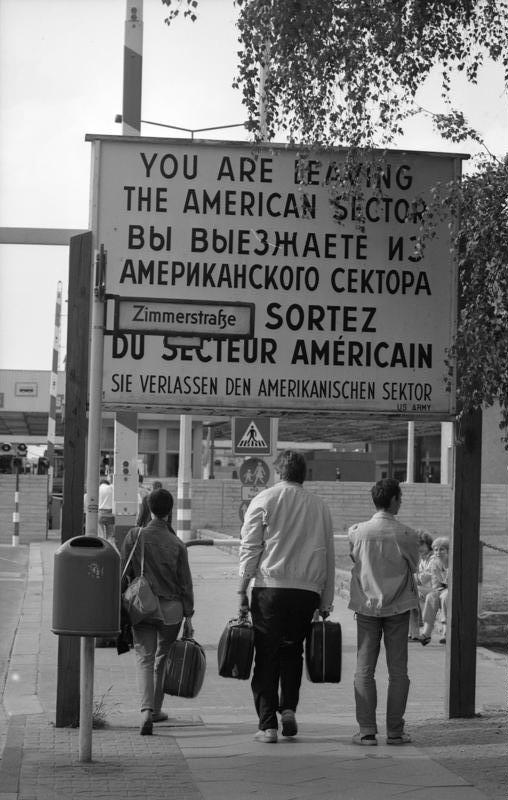
This one is another test with background sound, and uses shots taken from 2 angles looking East and West. The first is shot from the Western side, with the "you are leaving the American sector" sign, and second looks at the Western side, with a convenient representation of McDonald's in the background. 

The noise is recorded on the same street, where tourists, coaches and cars, cyclists all fight over the space. It's also the first trial in seeing how I short clips should follow the preceding one. This one just snaps to another.


Deutsches Bundesarchiv (1988) File:Bundesarchiv B 145 Bild-F079005-0022, Berlin, Grenzübergang Checkpoint Charlie.jpg [11/04/2011]

Sunday, 10 April 2011

Checkpoint Charlie [test]


The first clip made from 4 still images, not 2. It's a little more confusing - and complex. I feel the changes are not simply from one to another, but mixture and accommodation of multiple perceptions. I'm trying to add an aesthetic depth to the clips also.

A food court with sushi, kebab and pizza has been replaced by McDonald's, which must have increased the value of Checkpoint Charlie as a tourist trap. The prop-guards will pose with you for 2 - or €1 if you're young and female. Some of them would cover their face with the American flag to prevent tourists capturing images without payment. This particular one had an aggressive attitude towards a family asking tourists for money, mocking them and calling them "gypsies". Perhaps he doesn't appreciate the capitalist competition.

Tourist Lovin' scenes at Checkpoint Charlie.

Traces of advertising in São Paulo


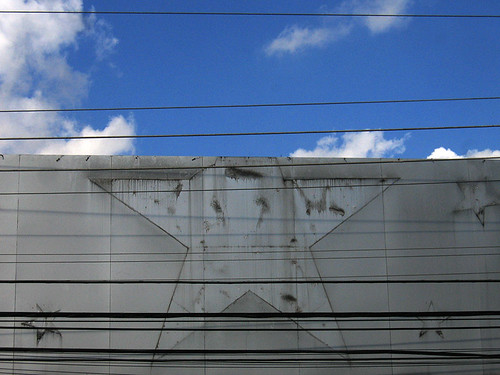
Adverts ban in São Paulo created signs with colours removed and walls with traces. These images share similar visual effect with Sophie Calle's The Detachment.

De Marco, T. (2007-08) São Paulo No Logo. [Online] http://www.flickr.com/photos/tonydemarco/sets/72157600075508212/ [10/04/2011]


Spurlock, M. (2011) The greatest TED Talk ever sold. [Online] http://www.ted.com/talks/morgan_spurlock_the_greatest_ted_talk_ever_sold.html [10/04/2011]

Thursday, 7 April 2011

The Otherside [Die Andere Seite 2007]


"Using first-person testimony from both sides of the divide, this animated documentary explores life with the Berlin Wall. Documenting the ideas, notions and preconceptions of Berliners about life on ‘the other side’, Die Andere Seite is a reflective visual essay on the interplay between myth and reality." (Land, 2007)
Berliners who experienced the divide are interviewed in Die Andere Seite. With segments of private memories, the work forms a broader collective feel/perceptions towards the Wall. With sound that accompany those experiences.
Land, E. (2007) Die Andere Seite 2007. [Online]
 http://www.ellieland.com/elliesite/?page_id=18 [07/04/2011]

Thursday, 17 March 2011

Web-Elective Critical Evaluation

Web-Elective presentation

Saturday, 12 March 2011

design paths

Through consideration, I decide to create a story for the website. It is structured around segments /mages of memories, some distant and vague, some clear and more discriptive. It will not have a clear navigation, as I want to draw the audiences' attention to the fading, subjective and fluid nature of how events are remembered.

Some mysterious and ambiguous elements of James Hart Dyke's work on MI6, and personal and investigative endevour made by Timothy Garton Ash into his own file created by the East German secret police, have influenced my thoughts in composing the ideas and designs of this website.

"How can you ever really know what is fact, what fiction, and what still lies entirely hidden?" (Garton Ash, 1997, p.205)

The hotspots on each pages are not labeled and viewers are required to hover over the images to before they can turn the page of their experience. After travelling through the path without a clear signposts, they will reach a page (or be transfered to) a page which will have my short clip The New Republic. These uncertain stages are in reference to what people experienced in Germany (especially East Germany) after the Berlin Wall was breached and two Germanys unified in 1990.

"Yesterday your secret was hidden in a single dusty cardboard file. Today it lies open on a million breakfast-tables." (Garton Ash, 1997, p.194) 

The project also follows a process of recording/observing Berlin, and making public the work I've produced - even though it does not have clear indications often seen in artists' portfolio sites. One idea is to lead visitors eventually to my vimio page.

Garton Ash, T. (1997) The File: A Personal History. London: Flamingo.

Mount Street Gallery [2011] A Year with MI6: James Hart Dyke. [Online]
http://www.mountstreetgalleries.com/prints/?page_id=6&shopp_category=2 [12/03/2011]

Thursday, 3 March 2011

Clips from Berlin


I have not met a Berliner who speak positively of the current Checkpoint Charlie. The location is filled with tourists photographing guys posing as U.S. soldiers for 2€, with herds of coaches driving by the Checkpoint museum. I know there are things running deeper - the lives lost seeking freedom, or devastated by the Cold War policies - that are not glossy enough for the coaches to stop.

I'm first surprised with a McDonald's in front of the museum which was't there when I last visited, and I think to myself, it might as well.


This clip was made from shots at Griebnitzsee, on the border of Berlin and Brandenburg. The wall is on the former East German side, with West Berlin in the background. The wall used to have graffiti that changed every time I went, and it's now painted white. The riverside path that ran along the former border has since been cut up by houses built on the riverbank.


...and outside the former Permanent Representative [Ständige Vertretung] of West Germany, in former East Berlin. The facility had to be shut down in August 1989 as it couldn't cope with the number of East German citizens seeking  visa to exit East Germany.

The first 2 clips are 20 seconds long, and the last 30.

Sunday, 20 February 2011

Capital cities

2 more test clips, of post-elections Berlin. The city has become the capital city of unified Germany, from being divided by the Wall, although various elections/referendum results show Berliners' diverse values.


Wednesday, 16 February 2011

'Operations can be surreal'

Ideas and concepts for website. I have been searching for a structure which is not as straight forward nor simply a portfolio site, with mysterious and uncertain narrative. The artist James Hart Dyke has worked with MI6, and due to confidential nature, he has made identities of agents vague and hidden.

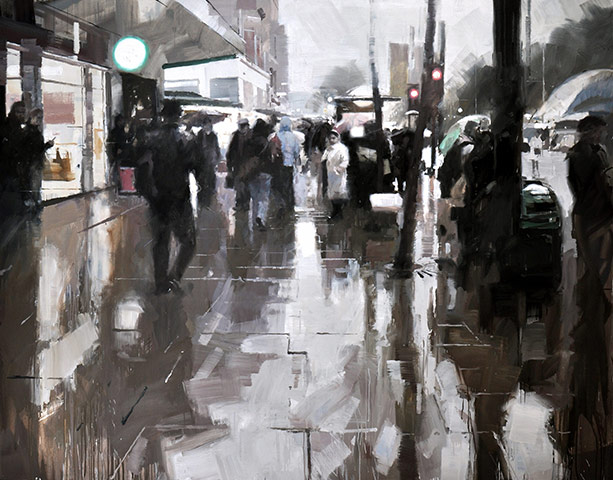
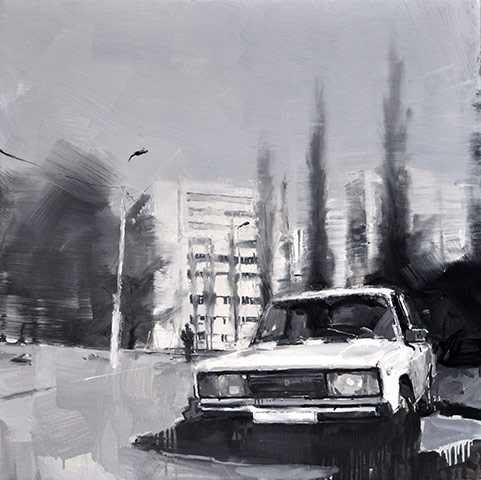
Espionage 2010, oil on canvas. An ordinary street scene. But is it ordinary, or is something out of the ordinary going on here? 'In the world of the spy, extraordinary events happen in the midst of the mundane,' says Hart Dyke. 'Once you're part of that world, you're never sure that things are as they seem. It can seem paranoid but it's paranoia with a point. Is this an ordinary day in a city or is it the scene of an SIS operation?'  

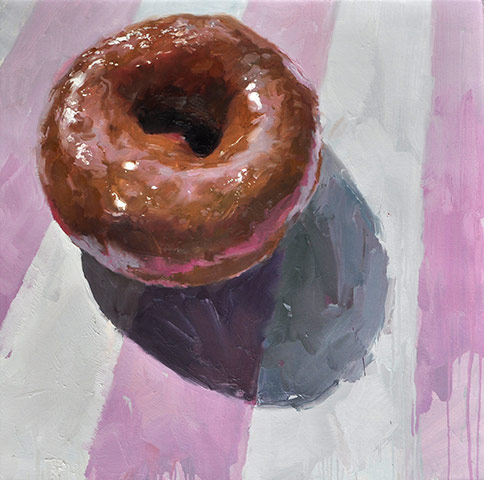
Doughnut on Stripes 2010, oil on canvas. The intelligence community sometimes refer to the GCHQ building as 'the doughnut'

Housing Estate 2010, oil on canvas. A scene reminiscent of the cold war  

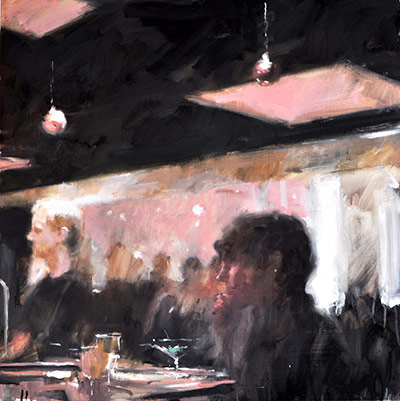
Ice Breaker 2011, oil on canvas. SIS officers need to be able to cultivate contacts. An officer contemplates how she might strike up a conversation with her target, who is having a drink at the bar  

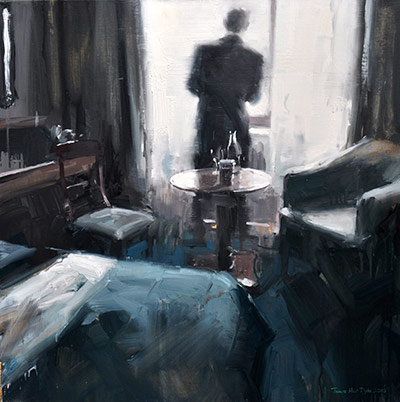
Waiting in the Hotel Room 2010, pencil, watercolour and charcoal on paper. Spies spend long hours working, waiting for contacts and waiting for calls. 'There's a lot of hanging around,' says Hart Dyke. 'You're in a completely ordinary place, waiting for something quite extraordinary to happen... and often waiting for a long time.'
"James Bond, as Ian Fleming originally conceived him, was based on reality. But any author needs to inject a level of glamour and excitement beyond reality in order to sell." (MI6, in Norton-Taylor, 2011)
Guardian.co.uk (2011) James Hart Dyke: A Year with MI6 - in pictures. [Online]
 http://www.guardian.co.uk/artanddesign/gallery/2011/feb/14/james-hart-dyke-mi6-in-pictures?intcmp=239 [16/02/2011]

Norton-Taylor, R. (2011) Former spies' verdicts on James Hart Dyke's MI6 paintings. [Online]
 http://www.guardian.co.uk/world/2011/feb/14/spies-hart-dyke-mi6-paintings [16/02/2011]

Friday, 11 February 2011

memory clips

I have been creating more clips, reflecting on loss and changes. The first clip pans from left to right, with a piano and a pianist. It focuses on the emotions of loss experienced by residents in the former East Germany, who ofter feel the unified Germany is not interested in hearing their views. The second clip portrays the changes they experience, from welcoming freedom and the democratic changes in East Germany, to uncomfortably altering their ways of life in the new republik.


Thursday, 3 February 2011

The Patrol


A 15-seconds video clip made of photographic images. To portray the memory of the lost border.

Usuda, T. (2011) The Patrol. [Online]
 http://www.vimeo.com/19515677 [03/02/2011]